three weeks, one medicine cabinet, and a plot twist
Pillio - Check it out!
So I lowkey wasn't sure I'd write this one, but here we are.
I've been to summer camps before and mostly hated them. I'm not the best at talking to people or making friends, and usually by day three I'm calling my parents about how much I hate my life. But this summer I went to the Wharton Global Youth Management & Technology Summer Institute at UPenn for three weeks, and I didn't do that even once. I'm counting it as a win. Here's the whole story — including the part where we got told we lost.
everyone had a lane before we had an idea
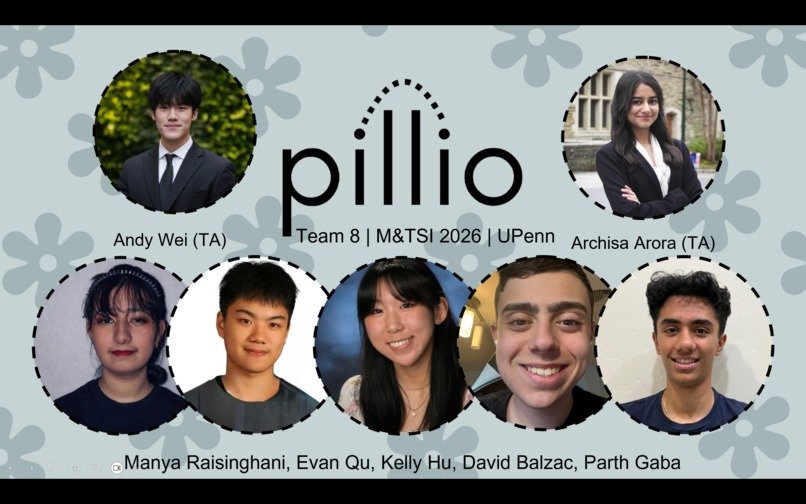
Day one, we got assigned to a table together and went around asking what everyone was into. Parth did electrical engineering, David mechanical, Kelly and Evan business, and I did software. So before we had a single idea, we already knew the shape of our team — which turned out to matter a lot.
Then came the hard part: coming up with something to build. The way we brainstormed was kind of unhinged in the best way. Each of us wrote thirty ideas alone, picked our ten best, and combined them into a list of about fifty. Then we kept voting and cutting it in half, and half, and half, until we had a top three we loved. We took them to Andy, our head TA — and he told us they were just bad.
So, back to the drawing board. And then we would not stop. We had team dinners where we'd put our phones in a corner and just throw out problems from our own lives. Over one weekend I made a list of 140 different problems, because you always have to start from the root problem, then overcomplicate it, then simplify. We brought Andy something like eleven ideas: mold detection, flippers for people who can't move their legs, bone-conduction headphones. So many ideas.
how we found Pillio
One day we were building a random little AI car, and Evan brought up something off my list of 140 — a medicine idea. He said he had this issue at home where his family had a bunch of random medications and no one knew how to use them. And Kelly went, "oh yeah, same." And Parth. And David. And me. Every single one of us had this exact problem in our own house.
We took it to Andy with basically zero confidence — like, "this might not be our best idea, we don't think you'll like it, but here it is." He'd been asking for something that actually interested him. And after all those rejections, all he said was: "this is okay." And we were like, FINALLY. Then he started riffing on where it could go, which is how we knew he was in. We finished the car, went to the whiteboard, and started drawing what a smart medicine cabinet could look like. That was the beginning of Pillio.
the cardboard test
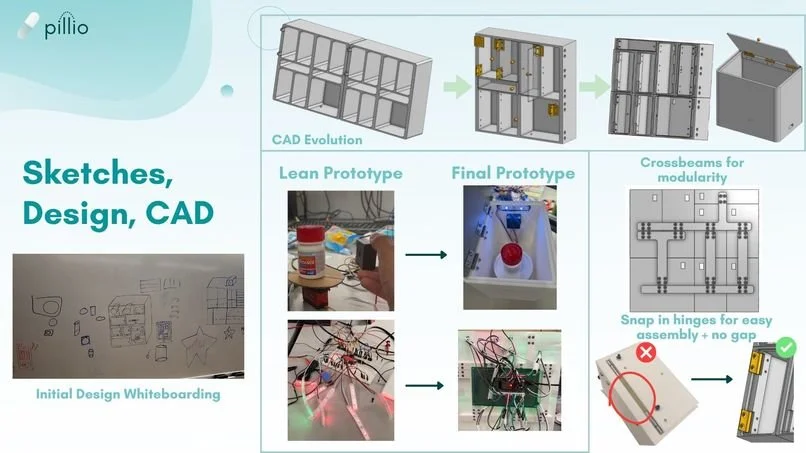
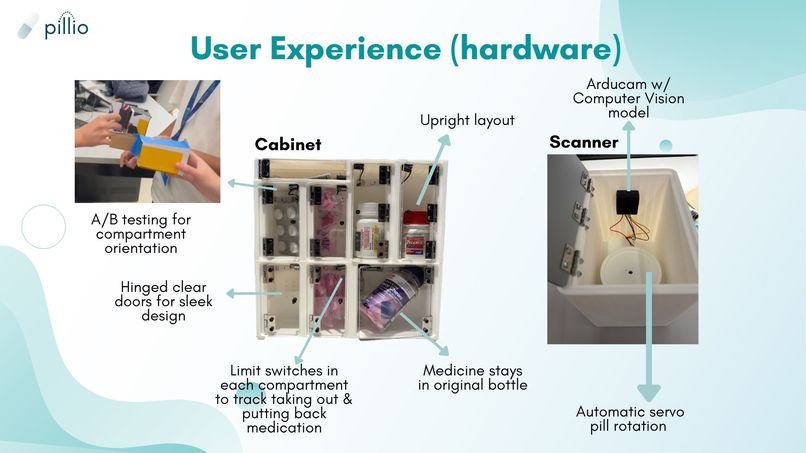
Here's the moment I think about most from the early days. We couldn't agree on one thing: should the cabinet be vertical or horizontal? We were genuinely split, and we could've argued about it forever. Instead we asked the TAs for cardboard, cut out a vertical version and a horizontal version, and walked around asking people to put a little Tylenol bottle into whichever one felt better. People overwhelmingly picked vertical. That was our first real design decision, and it came from users instead of from us guessing. I didn't forget that lesson (more on that later).
the part I owned, and the part that broke my brain
I was the software and integration person: I built the Pillio app, and I was in charge of getting the physical world and the digital world to actually talk to each other. Parth told me to just get started, so on Monday — the same day we locked the idea — I opened my laptop and started building. By Wednesday my teammates were panicking, like "oh my god, how's the app, what do we even want it to be?" And I was like… oh, I already started building it. Their faces.
I built the search, the whole base of the app, a household feature so families can share medication info, and a speech-to-text feature so you can just tell the app your symptom and it finds a match. Honestly, the app itself wasn't the hard part. The thing that broke my brain was deployment — getting it onto a real website other people could actually use. It took forever, endless errors, and I burned a lot of time trying one approach before realizing I'd never actually decided at the start which approach I wanted. That was the real lesson, and it's the advice I gave everyone who asked me afterward: decide what you're building before you build it.
And the best part of the whole thing was that nobody stayed in their lane. Evan did almost all our financial modeling and helped with electrical. David did the CAD and jumped into the go-to-market plan. Parth did electrical and helped with my software. I stretched into the business side and helped write our go-to-market plan, which was completely new to me and genuinely hard — but I learned a ton from my teammates. We were all constantly wandering into fields we knew nothing about and learning from each other.
what Pillio actually became
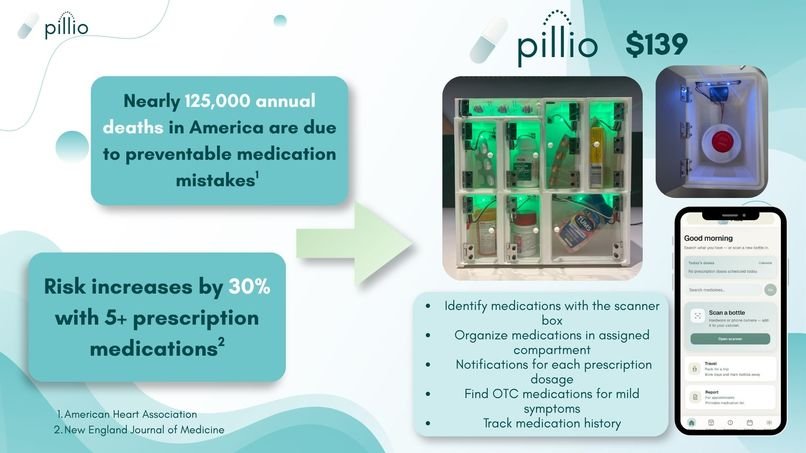
By the end, Pillio was a real smart medicine cabinet. You put a bottle in the scanning box, a servo spins it on a turntable, a camera photographs the label, and a computer vision model reads the name, expiration date, and use cases. Then Pillio lights up the right compartment with an LED to tell you where it goes, and sensors track when medications get taken out and put back. Your pills never leave their original bottles. The problem behind it is real: nearly 125,000 deaths a year in America come from preventable medication mistakes, and the risk jumps sharply once someone's on five or more prescriptions. That number is why the whole thing mattered to us.
We also got to meet real founders and companies during those weeks. The one who stuck with me was a CEO who'd invented a thin film that goes in the eye to help people with glaucoma; she talked about how she marketed her company and built a pitch, and it made the business side feel real instead of abstract. It's also what nudged me toward wanting to go deeper into electrical engineering next. Pillio is the thing that opened that door.
the plot twist
Okay. The part I have to tell you.
There were 16 teams, and we were genuinely confident. Our whole goal from day one had been to exceed Andy's expectations, because we kind of felt like he didn't think we'd do that well. And we'd worked for it: 12 to 15 hours a day, three weeks straight, weekends included.
Then Andy messaged us out of nowhere: you got cut from every single award. We were like, what? He said the only one we might have been near was something product-related — which made no sense, because business was our weak spot and technology was our strength. David literally asked how we weren't up for the Technology Integration Award. Andy just said, "you did good, it's okay, it's fine."
Everyone's hope drained through the day. Except Parth. Parth would not let it go: "Andy's lying to us. I have so much confidence in our technology." We kept telling him to move on. He refused.
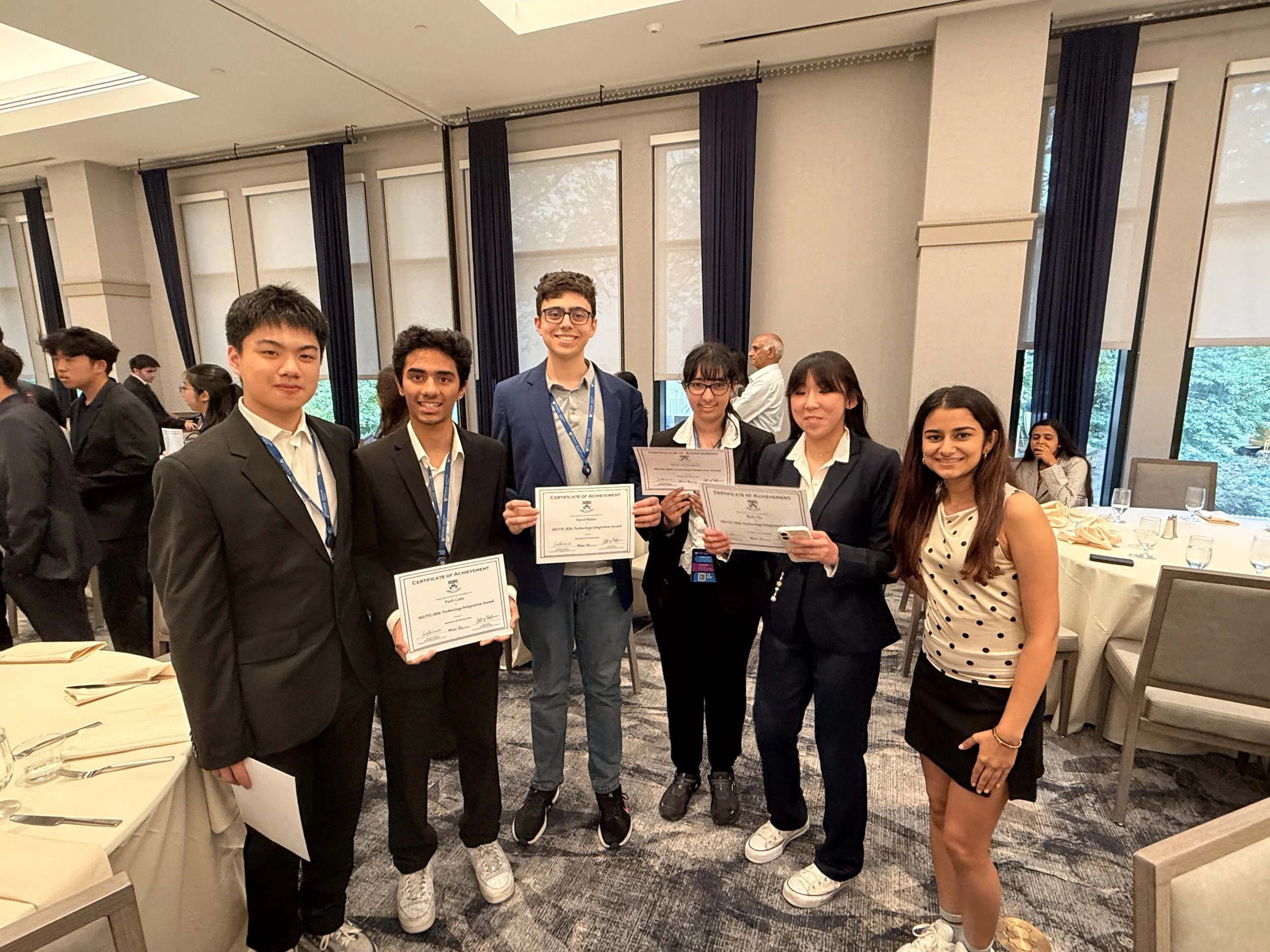
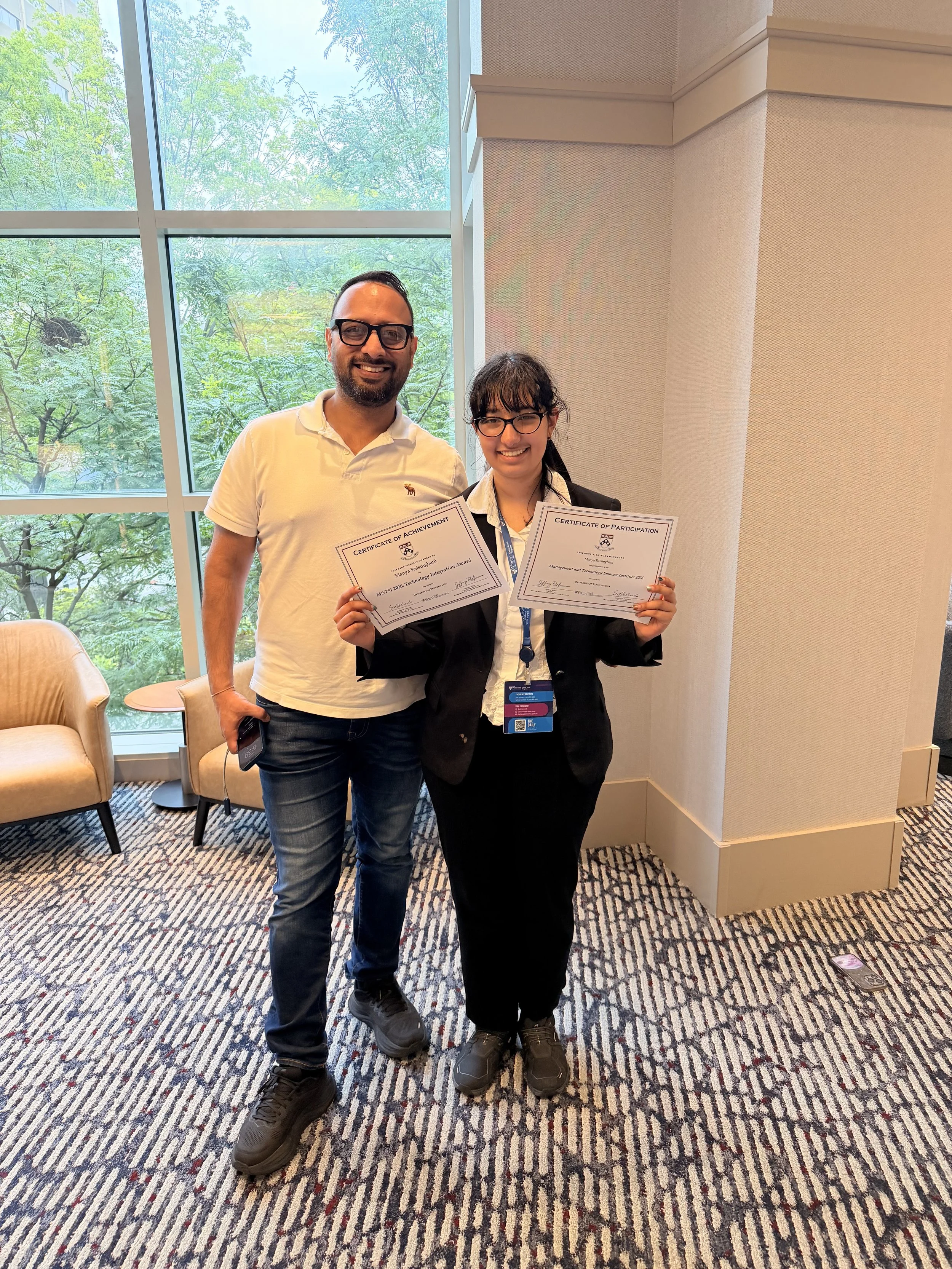
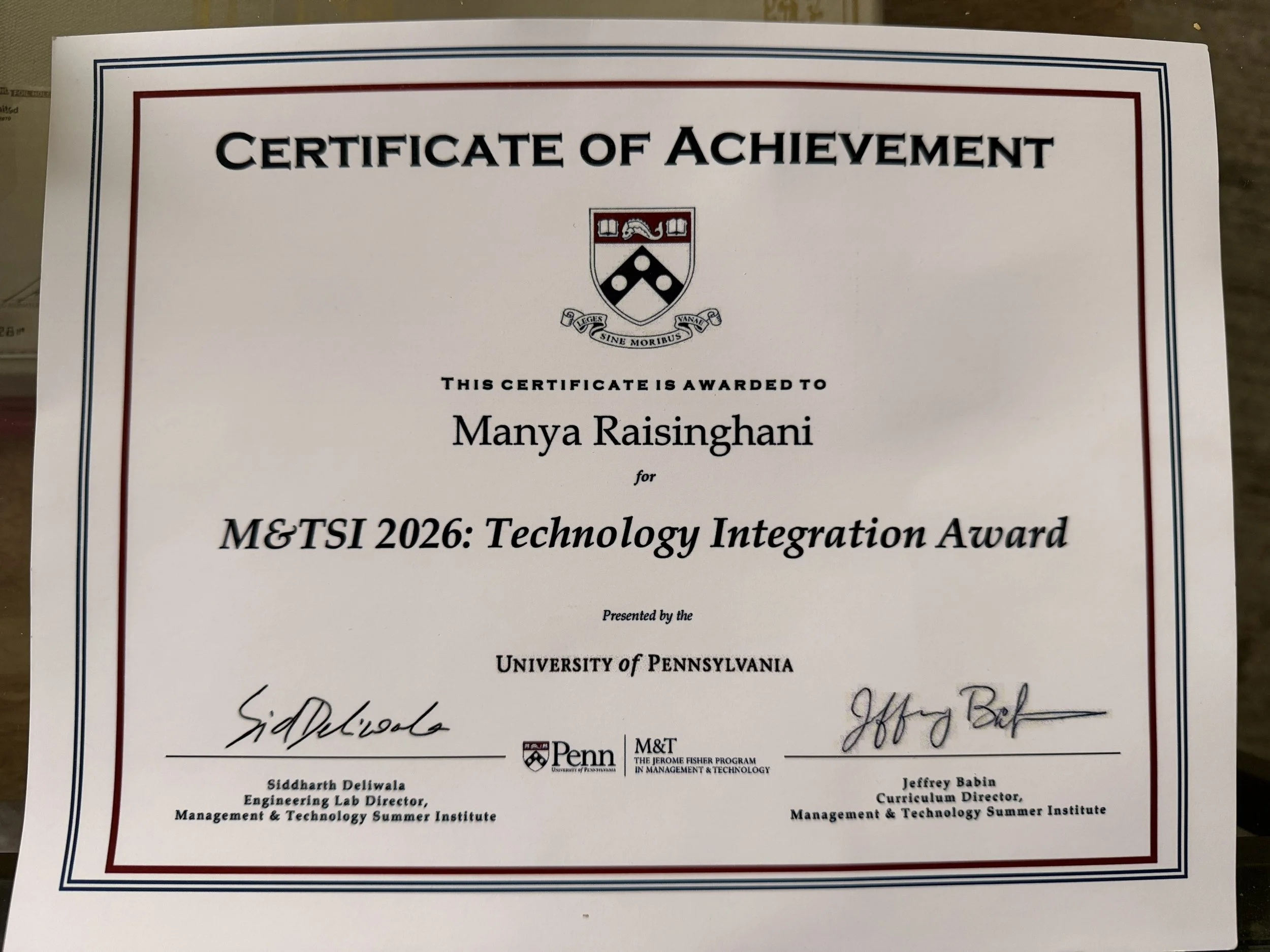
By the ceremony I'd made my peace with it. I was even telling people around me that we didn't get anything. And then they called Pillio for the Technology Integration Award. I don't think I've ever gone from "well, that's over" to "YO WHAT" that fast in my life. We ran up, smiles twice their normal size, completely stunned. Parth, fully vindicated. For the record, Andy had been messing with us the entire time.
And getting that specific award meant everything, because integration was the exact thing I'd spent three weeks fighting — the invisible hardware-meets-software glue that only shows up when it doesn't work. Later, thinking about why we won, I kept landing on one thing: we talked to our TAs constantly. We went to them, asked hundreds of questions, brought them every bad idea before we found the good one. I'm not naturally the person who reaches out. But this taught me that showing up and asking is a skill — and it's one I actually want to keep.
who should do M&TSI
If you're even thinking about M&TSI: try it. It shows you all these different kinds of engineering and where business and engineering actually meet. My real application tip: there's a part where you can submit an essay or a video, and you should do the video. You're already writing a hundred essays — a video lets you show the things you can't get across on paper. I talked about my theater, which has nothing to do with any of this, and my app, and an NGO I started with a friend. A video lets all of those different sides of you exist in the same place.
Which is kind of the whole point of this blog. I'm a theater kid and an engineer, and M&TSI was three weeks of those two halves of me finally being in the same room.
the full circle
Here's the part that actually excites me most: almost everything I learned points straight back at ThePodio, the app I've been building to help people with public speaking.
The biggest lesson is market research. With Pillio, our best decisions came from real testing — like that cardboard Tylenol experiment. With ThePodio, I kind of just… assumed. We decided our audience was speech-and-debate students without ever really checking, and now I realize public speaking is a massive audience and we could go so much broader. I learned how to actually build surveys, send them out, and let real people tell me what to build instead of guessing.
The second is physical AI — which is literally what M&TSI was about: building physical AI that helps people. Right now ThePodio lives entirely on a screen. But after watching another team build a public-speaking bracelet that picked up on your nerves through your heartbeat, I keep thinking: what if ThePodio didn't have to stay on a screen either? Finding a physical-AI angle for it is exactly the kind of thing that could make it unique — and it's a direct line from everything I just spent three weeks learning.
So that's my M&TSI journey. Three weeks, one medicine cabinet, one very fake heartbreak, and a whole list of things I now want to build.
thanks for reading me yap. 💙